How to make a career change: Tips & Plan
How To Make A Career Change
At some point in a career, many professionals find themselves asking ‘is this still right for me?’
Many professionals are taking the leap into new industries, roles, or organizations. It’s a journey that requires careful planning, self-reflection, and preparation.
No matter the type of transition, the right approach can turn uncertainty into opportunity. Let’s explore how you can navigate your career transition with confidence.
1. Self-Reflection: Understanding Your Why
Before diving into a career transition, it’s important to take a step back and ask yourself: Why do I want to make this change?
Questions to clarify your “why”
Take time to reflect on your values, skills, and long-term goals.
Ask yourself:
- Am I feeling stuck in my current role?
- Am I passionate about a new industry?
- Do I crave better work-life balance?
- Do my current goals no longer align with my career path?
Understanding your “why” will not only clarify your motivations but also help you make informed decisions as you move forward.
2. Research and Exploration: Exploring New Paths
Once you’ve identified your “why,” it’s time to explore your options. Research is key to understanding the landscape of your desired field making informed decisions.
How to research your target industry (practical steps)
Start by:
- Networking: Reach out to professionals in the industry you’re interested in and schedule coffee chats with them to gather specific information about day-to-day responsibilities, challenges, and opportunities in your desired role.
- Attending Events: Participate in webinars, career fairs, or industry conferences to gain insights and make connections.
- Using Online Resources: Platforms like LinkedIn, industry reports, and job boards offer valuable insights into job skills for your target roles. Identify keywords and skills employers prioritize, and tailor your resume and LinkedIn profile to highlight your transferable skills and relevant experiences.
This research can give you a realistic view of what to expect and help you build relationships in your target industry.
3. Skill Assessment and Upskilling: Bridging the Gap
As you explore new paths for a career change, you’ll likely identify gaps between your current skills and those required for your desired role. Don’t let this discourage you - career changes are all about growth and adaptability.
Close the gap with a simple upskilling plan
Here’s how:
- Upskill or Reskill: Enroll in online courses, certifications, or workshops to gain the knowledge you need.
- Gain Experience: Consider volunteering, freelancing, or taking on side projects to build relevant experience.
- Leverage Transferable Skills: Highlight skills from your current role that are applicable to your new career, such as leadership, communication, or problem-solving.
Remember, lifelong learning is a cornerstone of career success. Embrace the opportunity to grow and evolve.
4. Networking and Leveraging Relationships
Building relationships with professionals in your desired field can open doors to opportunities you might not find on your own.
Who to contact and what to ask
- Reconnect: Reach out to former colleagues, classmates, or mentors who might have insights or connections in your target industry.
- Seek Mentors and Advisors: Consider finding a mentor or career coach who can provide guidance and support. Additionally, consulting with professionals from staffing agencies can offer valuable industry-specific advice and help you understand market trends and opportunities.
- Join Communities: Participate in professional groups, online forums, or local meetups to expand your network and stay updated on industry developments.
Networking is about building relationships, gaining insights, and creating a support system that can guide you through your career transition.
5. Staying Resilient and Positive
Career transitions can be both exciting and overwhelming. Setbacks are a natural part of the process. Staying resilient and positive is key to overcoming challenges.
Keep momentum during your career transition
- Set Realistic Goals: Break your transition into manageable steps and focus on achieving them one at a time. This will help you stay organized and motivated.
- Document Milestones and Successes: Celebrate even the smallest improvements, whether it’s completing a course, securing an informational interview, or updating your resume. Documenting these wins can boost your confidence and remind you of your progress.
- Stay Adaptable: Be open to adjusting your plans as you learn more about your desired field. Flexibility can help you navigate unexpected challenges and seize new opportunities.
Persistence and a positive attitude will carry you through the ups and downs of your transition.
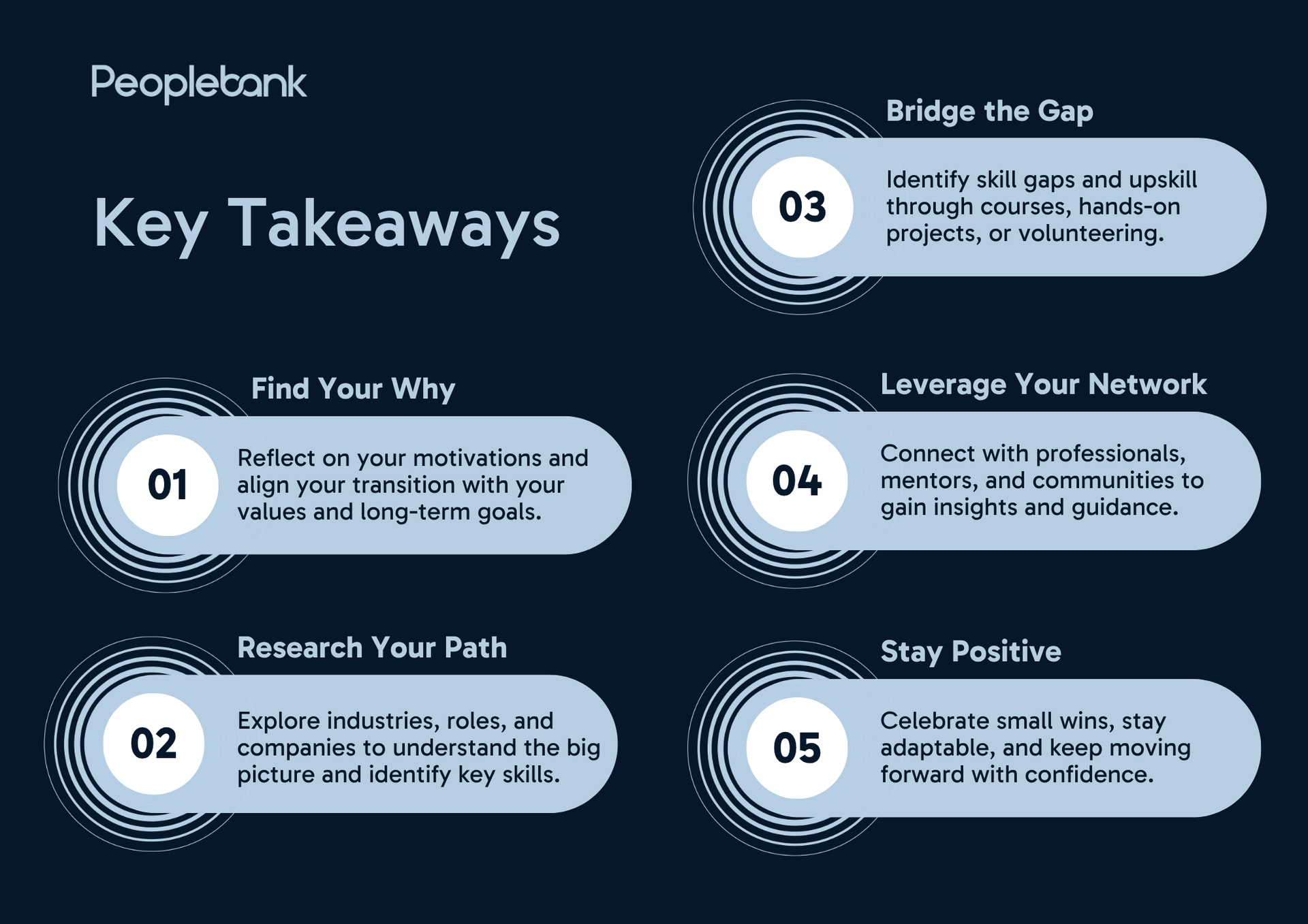
Career transitions may seem daunting, but with the right preparation and mindset, they can lead to incredibly rewarding outcomes. Whether you’re just starting to think about making a career change, or you’ve already decided to take the leap, remember that you’re not alone.
At Peoplebank, we’re here to support you every step of the way and connect you with opportunities, we’re committed to helping you achieve your career goals. So, don’t hesitate to reach out to us!