The 5 Essential Pillars for Employee Wellbeing
5 Essential Pillars of Employee Wellbeing
Employee wellbeing is no longer a ‘nice to have’. It’s a critical driver of how organisations perform and how sustainable work feels for the people doing it.
Research consistently shows that organisations that prioritise employee wellbeing experience higher productivity, better retention rates, and become more attractive to top talent.
Let's explore the five fundamental pillars that create a comprehensive employee wellbeing framework.
Employee wellbeing goes beyond physical health - it’s a multi-dimensional approach that touches every aspect of an employee’s life.
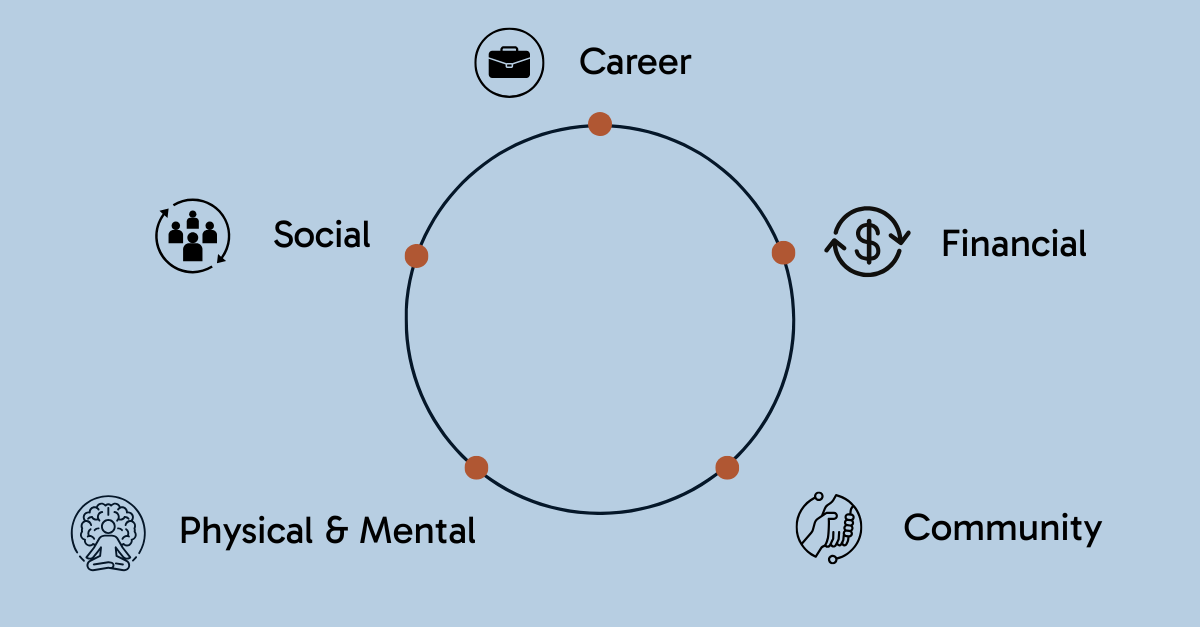
1. Career Wellbeing: Help People See a Clear Future
Career wellbeing is about whether people can envision their progress at work. When employees understand how they can grow, develop, and advance, they are more likely to feel motivated, confident, and supported - especially during change.
What to implement
- Regular career conversations with a consistent cadence (e.g., quarterly or biannual).
- Learning and development through learning plans, training opportunities, and structured programmes.
- Mentorship and coaching to build capability and confidence.
- Clear progression routes, including what “good” looks like at each level and how people move forward.
How leaders can operationalise this
- Ensure managers run structured career conversations so the experience is consistent across teams.
- Make promotion and progression criteria transparent, with examples of expected behaviours and outcomes.
- Align development opportunities with workforce needs, not only individual requests.
2. Social Wellbeing: Building Strong Workplace Connections
Social wellbeing reflects the quality of everyday working relationships - how people collaborate, receive support, and feel able to speak up. A strong social environment reduces stress, improves teamwork, and helps people address issues early.
How to foster it
- Encourage open communication and psychological safety.
- Implement regular team-building activities and cross-departmental projects.
- Provide managers with conflict resolution training.
- Create recognition programs that celebrate teamwork and collaboration.
Strong social bonds transform the workplace from a job site into a community where people want to contribute their best.
How leaders can operationalise this
- Model the behaviours you want: listen actively, respond constructively, and increase transparency.
- Provide simple toolkits for difficult conversations and inclusive team practices.
- If you use hybrid or flexible working, build connection into the way teams work, ensuring remote employees are included meaningfully.
3. Financial Wellbeing: Strengthen Rewards and Financial Confidence
Financial wellbeing supports a sense of security and reduces uncertainty. Financial security extends beyond competitive salaries. It also includes transparency, fairness, and understanding how rewards, benefits, and performance connect. A comprehensive approach includes both immediate and long-term financial wellness support.
What to implement
- Rewards transparency, including how bonuses, performance measures, and pay progression work.
- Benefits literacy through accessible benefits guides, short workshops, and clear signposting.
- Support for long-term planning (where appropriate), such as retirement preparation resources.
- Fair and transparent performance management, reducing perceived bias.
How leaders can operationalise this
- Review rewards processes regularly to support consistency and perceived fairness.
- Communicate changes early and clearly, especially when frameworks evolve.
- Partner with finance/benefits stakeholders to ensure employees receive accurate, usable information.
These initiatives demonstrate organizational investment in employees' financial futures while building a more capable workforce.
4. Physical & Mental Wellbeing: Support Recovery and Resilience
True health is the integration of a healthy body and a resilient mind. Physical and mental wellbeing includes workload balance, recovery, and access to support. When people can recover and receive appropriate help, they are better able to sustain performance and maintain health over time.
What to implement
Here’s how you can support it:
Physical Health
- A diverse range of activities such as on-site yoga classes, meditation sessions, team fitness challenges, or educational workshops on stress management address both physical and mental health needs. These activities are intentional pauses in the workweek that help employees unplug and regain focus.
- Investing in ergonomic workspaces - adjustable desks, supportive chairs, and proper monitor setups alleviate strain and encourages movement throughout the day.
Mental Support
- Provide access to Mental Health Resources and an Employee Assistance Program (EAP) for confidential support.
- Implement supportive policies like flexible scheduling and dedicated mental health days. For example, at Peoplebank, we have "ME Day" - a dedicated day off for employees to focus entirely on their own wellbeing.
How leaders can operationalise this
- Address prevention as well as support: tackle chronic overwork and workload imbalance.
- Train managers to spot early warning signs and respond consistently.
- Ensure communications about wellbeing support are respectful, clear, and non-judgemental.
5. Community Wellbeing: Fostering Belonging and Purpose
Community wellbeing strengthens belonging and purpose—so people feel connected to others and understand the value of their contribution. When sense of community is strong, employees are more engaged, more resilient, and more likely to stay.
What to implement
- Enable belonging through inclusive team spaces and meaningful social connection.
- Encourage participation in volunteer activity and values-aligned community initiatives.
- Celebrate shared wins and reinforce desired behaviours and organisational values consistently.
- Communicate the company’s mission clearly and help employees understand how their contribute to broader impact, especially during onboarding and leadership updates.
How leaders can operationalise this
- Move beyond one-off initiatives by focusing on actions that improve the day-to-day employee experience.
- Ensure community efforts reach different groups of people, not only those who are most visible.
- Embed purpose and impact messaging into regular leadership touchpoints, such as team updates and onboarding.
Ultimately, we aim to create an inclusive environment where every employee feels seen, heard, and valued.
Measuring Success
Building a culture of wellbeing is an ongoing journey. Its success depends on listening and adapting. Start by assessing your current workplace culture and identifying gaps in these five pillars and use these metrics to track your impact:
- Employee engagement & satisfaction surveys
- Retention rates
- Employee absence levels
- Participation in wellness programs
- Key performance metrics
- Regular feedback sessions
Conclusion: A Whole-System Approach to Wellbeing Drives Sustainable Performance
There is no doubt that employees are the foundation of sustainable performance. When organizations invest in a comprehensive employee wellbeing strategy - across career, social, financial, physical & mental, and community pillars - they create a more resilient workforce and a more engaging employee experience.
If you’d like support turning wellbeing goals into practical, HR-ready people processes, Peoplebank can help. Speak to Peoplebank today to discuss how we can support your organisation’s people priorities.